
Enduring strength
Traditional three-coat plaster is unmatched in strength and durability — the reason original walls still stand in homes more than a century old.
Plaster knowledge
The science, history and soul of one of architecture’s oldest finishes — and why it remains the finest wall a home can have.
From stone to wall
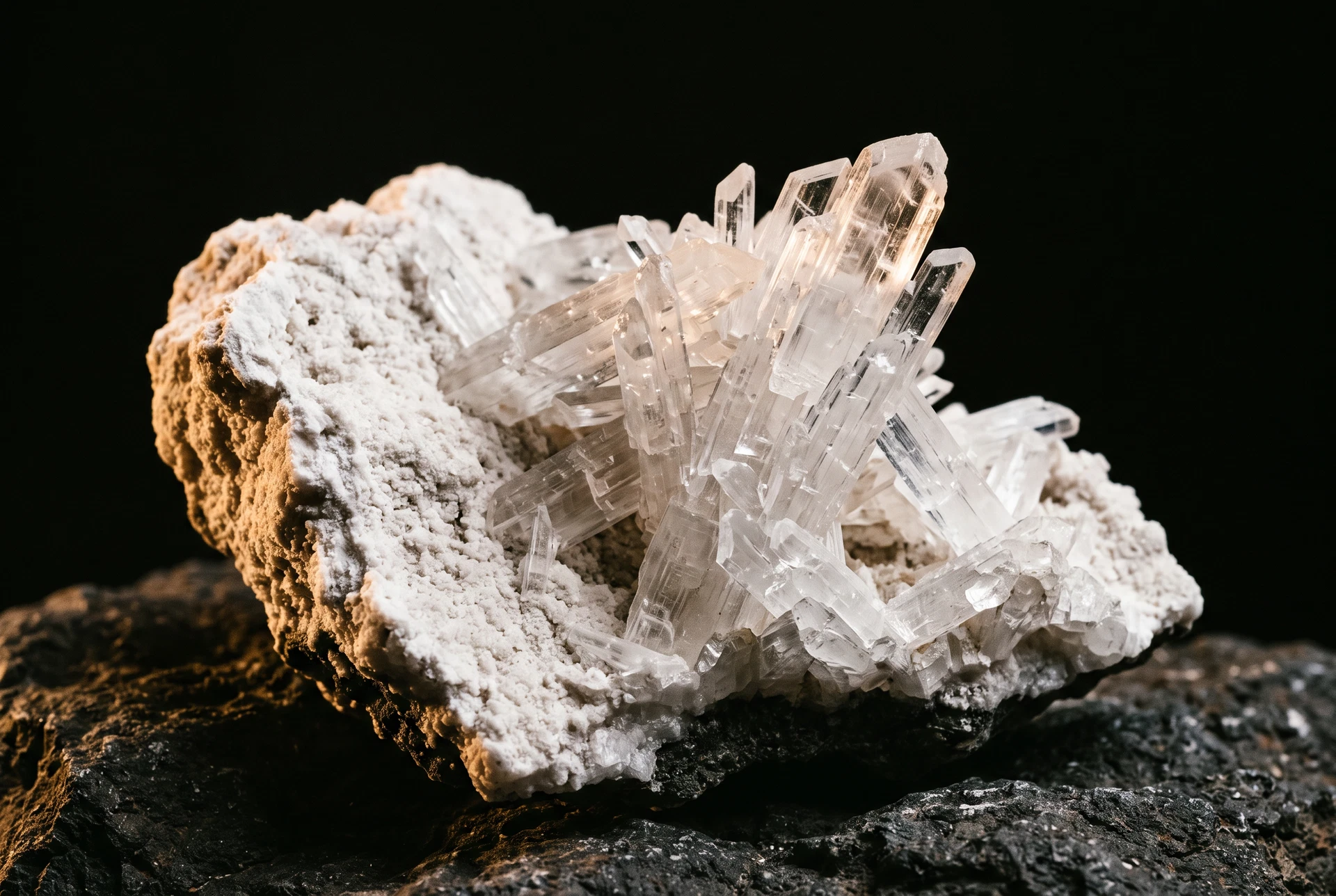
Plaster begins as gypsum — calcium sulfate dihydrate (CaSO₄·2H₂O), a soft mineral holding water locked inside its crystals. Most gypsum is quarried from near-surface deposits, then drilled, blasted and hauled for processing.
The rock is crushed and pulverized into a fine powder, so heat can reach every grain evenly in the next step.
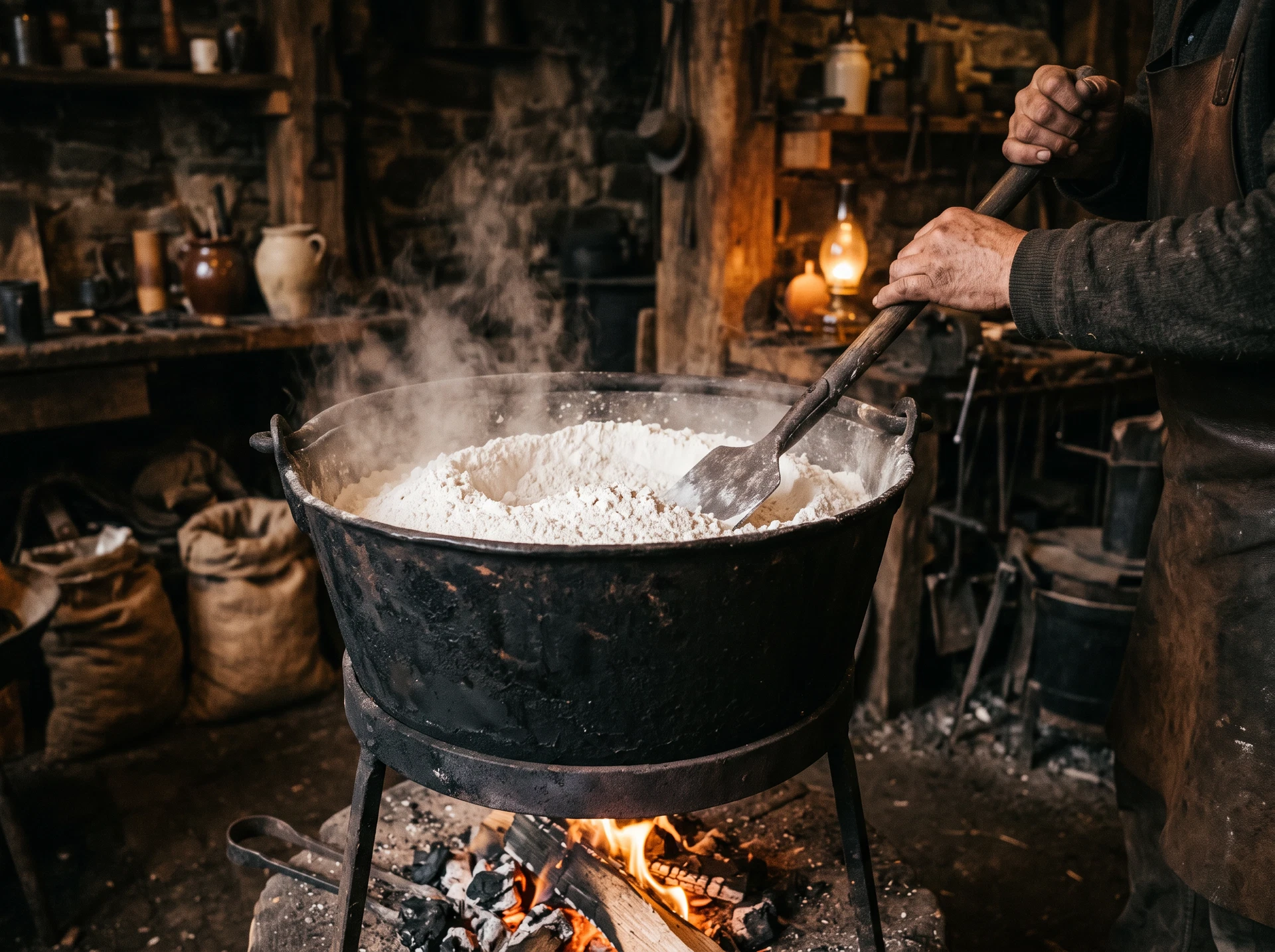
In a kettle, the powder is heated to roughly 300–350 °F. It seems to “boil” as about three-quarters of its chemically bound water is driven off as steam, leaving hemihydrate (CaSO₄·½H₂O) — the material known as plaster of Paris.
CaSO₄·2H₂O + heat → CaSO₄·½H₂O + 1½ H₂O ↑
On the job, the plasterer mixes the powder with water. The water rejoins the crystals, the mix gives off gentle heat, and it hardens back into solid gypsum — stone again, now shaped by hand into a wall.
CaSO₄·½H₂O + 1½ H₂O → CaSO₄·2H₂O
The lime cycle
Before gypsum, walls were finished with lime. Limestone or oyster shell is burned into quicklime, then slaked with water into a soft putty — a reaction that releases heat. Mixed with sand and animal hair and troweled onto the wall, the lime slowly draws carbon dioxide from the air and hardens back into limestone. It can take months to cure fully, which is why gypsum, setting in minutes, took over around 1900.
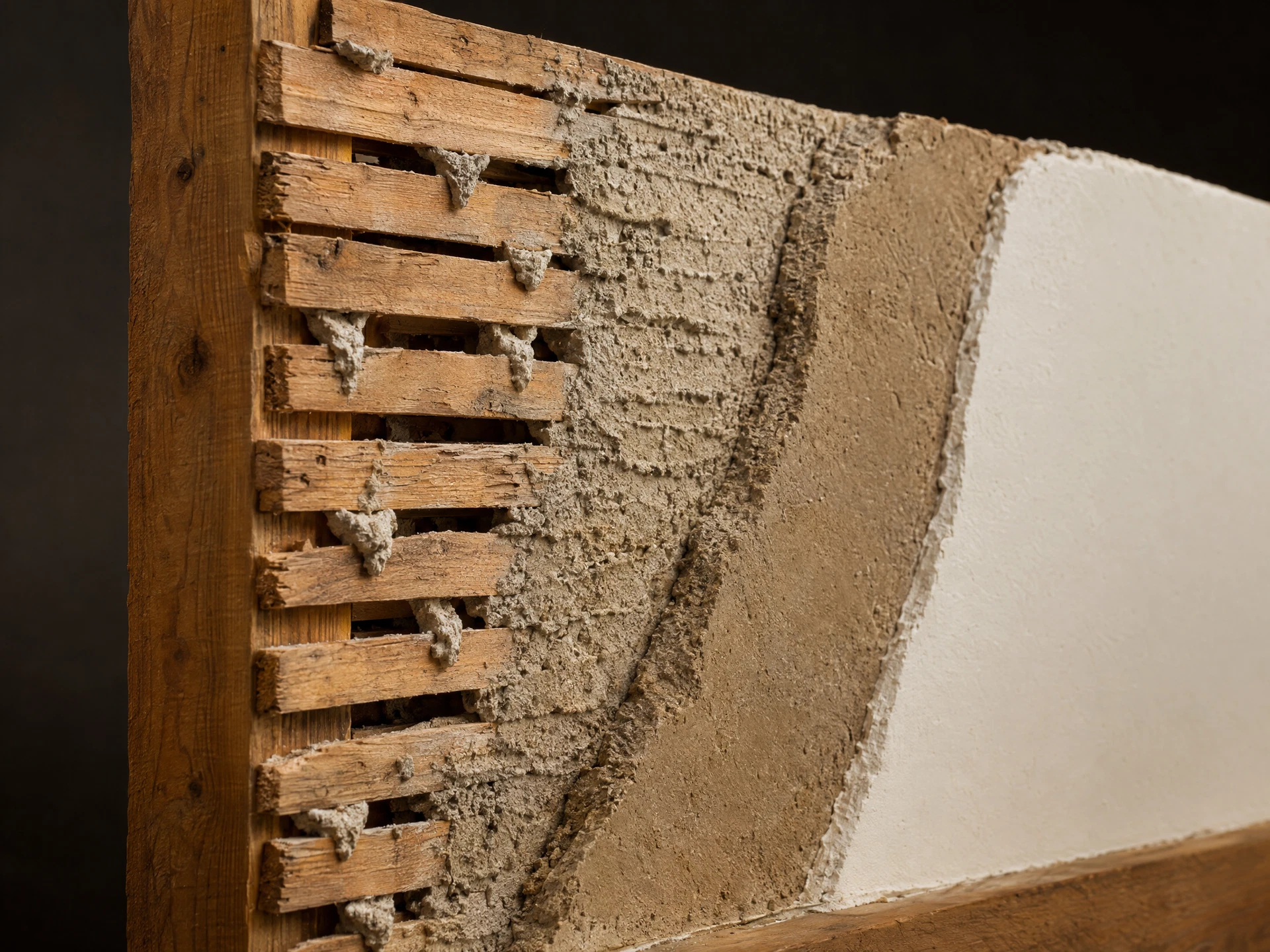
Built in layers
Stick with plaster
Traditional three-coat plaster is unmatched in strength and durability — the reason original walls still stand in homes more than a century old.
Plaster is a non-combustible mineral surface, and historic plaster walls are valued for the fire resistance they add to a building.
Dense, solid plaster reduces sound transmission between rooms far better than thin panels.
Fresh lime is strongly alkaline (around pH 12.4), an environment that inactivates bacteria and viruses — and plaster has no paper facing for mold to feed on.
Lime plaster is vapor-permeable, helping older masonry walls release moisture rather than trap it.
Plaster can be patched, re-keyed and refinished again and again — it is restored, not thrown away.
“Plaster in a historic building is like a family album.”— National Park Service, Preservation Brief 21
Ten thousand years of walls
The earliest known gypsum plasters appear in Anatolia.
Egyptian builders use gypsum plaster; later, lime plasters finish Greek and Roman walls.
Gypsum quarried in the Montmartre district gives “plaster of Paris” its name.
Gypsum plaster is widely adopted in America because it sets in minutes rather than months.
Plaster remains the standard wall surface for nearly every building — until drywall begins to replace it.
Fewer craftsmen practice the trade. We are keeping it alive.
Free estimates · Residential & commercial
Call or text and you’ll speak with the craftsman himself — not a call center.